How do you perform on the biggest stage when everything's against you?
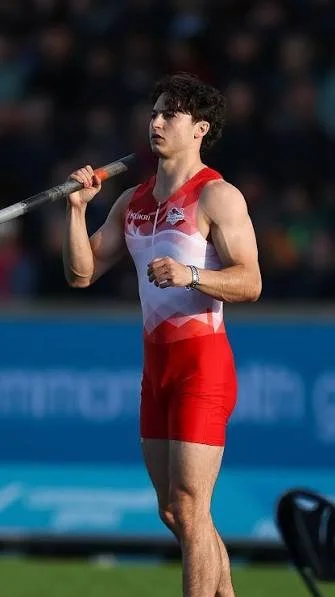
A few days before Owen stood on the runway at the Commonwealth Games, we spoke.
He'd been carrying a back injury. His last session before the Games, he managed two vaults and had to stop. Two. Then off to one of the biggest competitions of his life, a full stadium, every reason to doubt whether his body would even let him compete.
The questions in a moment like that are brutal, and they're familiar. Am I even going to be able to vault? How do I recreate my best when I've barely trained? How do I deliver on this stage when it feels like everything's against me?
If you've ever stood on your own version of that runway, you know the pull. The instinct is to reach for consistency. The best performers are consistent, so consistency must be the thing to chase. Lock in the routine. Repeat what worked last time. Control the variables.
I want to point you in a different direction, because I think consistency is the trap, not the answer.
Consistency is a cookie-cutter
Here's the thing we miss. Your best performances don't come from repetition. They come fresh. New. Alive in the moment. Every genuine peak you've ever had arrived from the same place, and not one of them was a copy of the last.
When we innocently reach for consistency, what we're actually reaching for is the intellect. We take an idea from the past, something already old and already stale, and try to press it onto a moment that's brand new. It's a cookie-cutter. It's the wrong mechanics. It is simply not the space your best comes from.
There's a name for this, and it isn't mine. Denise Holland calls it the consistency paradox, innovation over routine, in her book PlayFreely. The framing is hers, though it grew out of a conversation the two of us once had. Reading it back put words to something I'd felt for years on the runway: we keep demanding steady output from a vessel that is never the same two days running. As Denise puts it, we have "innocently traded the infinite potential of innovation for the illusion of consistency." We go hunting the wrong quality, in the wrong place.
That reach for consistency feels responsible. It feels like preparation. But underneath, it's a control crutch. A way of trying to feel safe by pretending we can plan a performance out in advance. We can't. Nobody can. The moment always arrives new, and no amount of rehearsal in your head hands it to you before it comes.
What we actually talked about
So that's where Owen and I went. Not into "how do we force the body to be consistent," but into seeing where great performance actually comes from.
When you understand that your best is always fresh, always live, always drawn from source rather than manufactured by effort, something loosens. You stop clinging to the crutches. You stop trying to control what was never yours to control. And in the space that opens up, you're free.
Free to show up. Free to meet the moment exactly as it is, injury and uncertainty and all. Free to enjoy what comes, vault to vault, instead of dragging the whole competition into your head at once.
Two vaults and a bronze medal
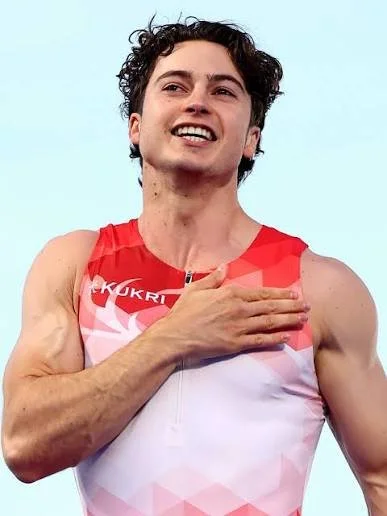
Owen went out and thrived. Into the noise and the buzz and the thrill of it, he surrendered. Not gritted his teeth and forced it. Surrendered to it. Bronze at the Commonwealth Games, a vault of 5.70, one centimetre under a personal best of 5.71, on a back that had given him two vaults all week.
That isn't a story about toughness. It isn't about a stronger routine or a better plan. It's what becomes available when you stop trying to be consistent and start trusting the place your best has always come from.
So the next time it seems like everything is against you, notice the reach for control. Notice the pull to make it safe, to make it a copy of before. And consider that the freedom you're actually looking for might be on the other side of letting that go.
Your best was never something you manufactured. It was always something you allowed.
© Athletics Weekly
If you want to see where your own mind is quietly getting in the way, I built a short quiz that maps it in about four minutes.Take the quiz.